QUESTIONS 1–5 · SAFETY & SUBSTANCE
The First Five: Safety and Real Substance
Is there a safety briefing, and what exactly does it cover?
This is the opening question because it sorts operators faster than anything else. Performance driving carries built-in risk, and the difference between a professional company and an improvised adventure is a real briefing before you touch the wheel.At EXR: every experience starts with a safety briefing, and the team walks you through the details before you start the engine.
What to check: Ask what happens before you start the engine: the car, the track and the pace, explained. An operator who skips the briefing is a glaring red flag.
Does a certified instructor sit in the car with you?
There's a world of difference between a five-minute briefing outside the car and a professional sitting in the seat beside you: the first one explains, the second one saves you - spotting a mistake before it happens, calling every entry line, and letting you push harder precisely because you're safer. At EXR: a certified instructor is in the car for the entire drive, on every experience, with no exceptions.
What to check: Ask directly: who sits next to me while I'm driving, and what's their certification? A briefing beforehand is not the same thing as an instructor beside you in the corner.
A real race track, or a lot with a few cones?
"Track experience" is a term that gets stretched thin: some operators sell a parking lot with a few cones under that name. A real race track is a built course with designed corners, safe run-off areas, and proper infrastructure - like the Arad race track with its 14 corners and pit lane. For a full rundown of every venue in the country, see our guide to Israel's race tracks.
What to check: Ask for the exact name of the venue and pull up a map. If the answer is vague ('a closed venue somewhere in the center') there's usually a reason.
How much actual driving time do you get?
The biggest gap between expectation and reality in this field is time behind the wheel. The event's total length includes arrival, waiting, briefings, and driver changeovers - and the only question that actually matters to you is how much of that you spend driving. A fair operator gives you a real number; more on that in our guide to choosing a driving experience, which also explains why more time isn't always better.
What to check: Ask for numbers: how many sessions, how many minutes actually behind the wheel. A 'three-hour experience' with 12 minutes of driving isn't a lie - but it's not what you pictured, either.
How many cars can you choose from, and what condition are they in?
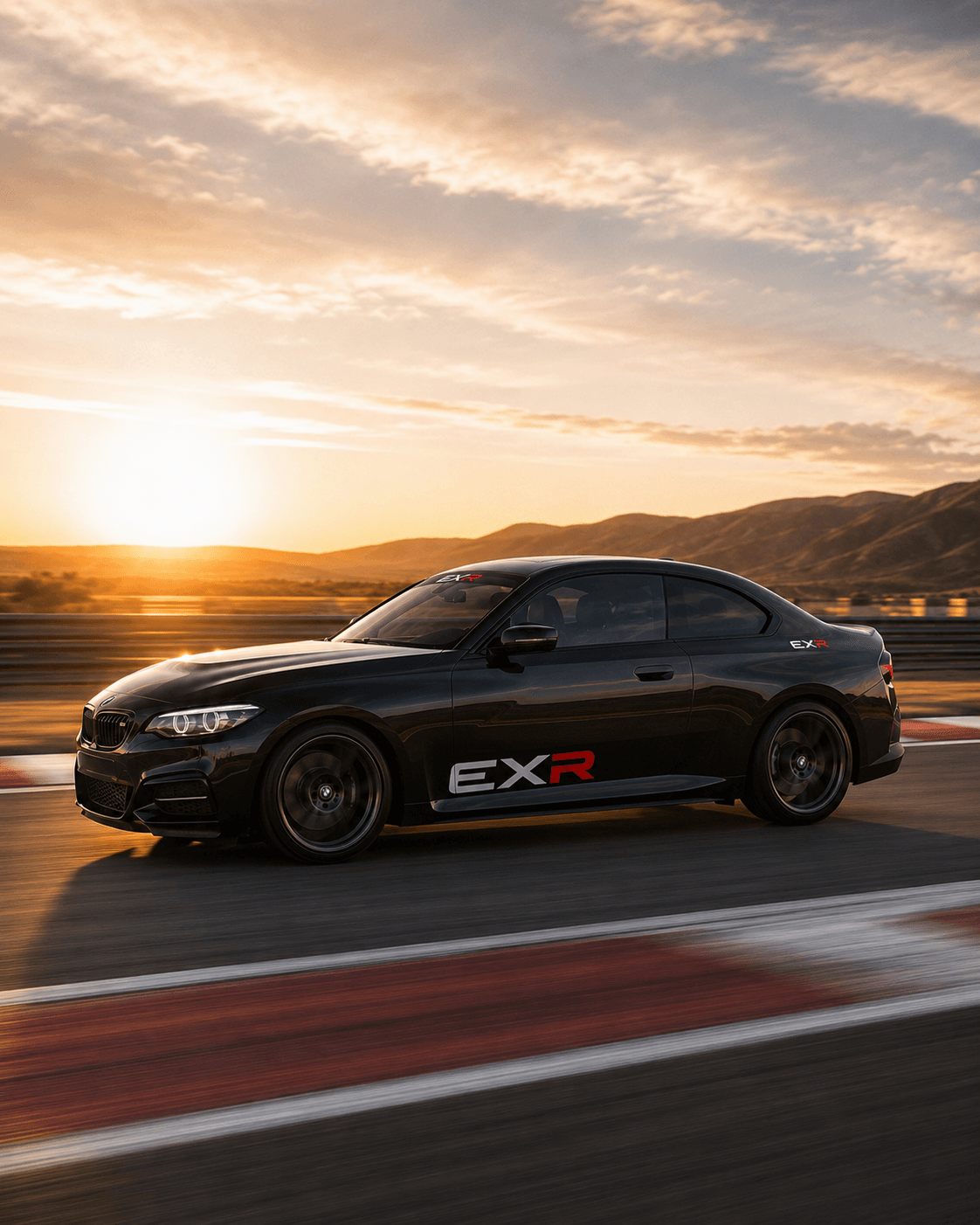
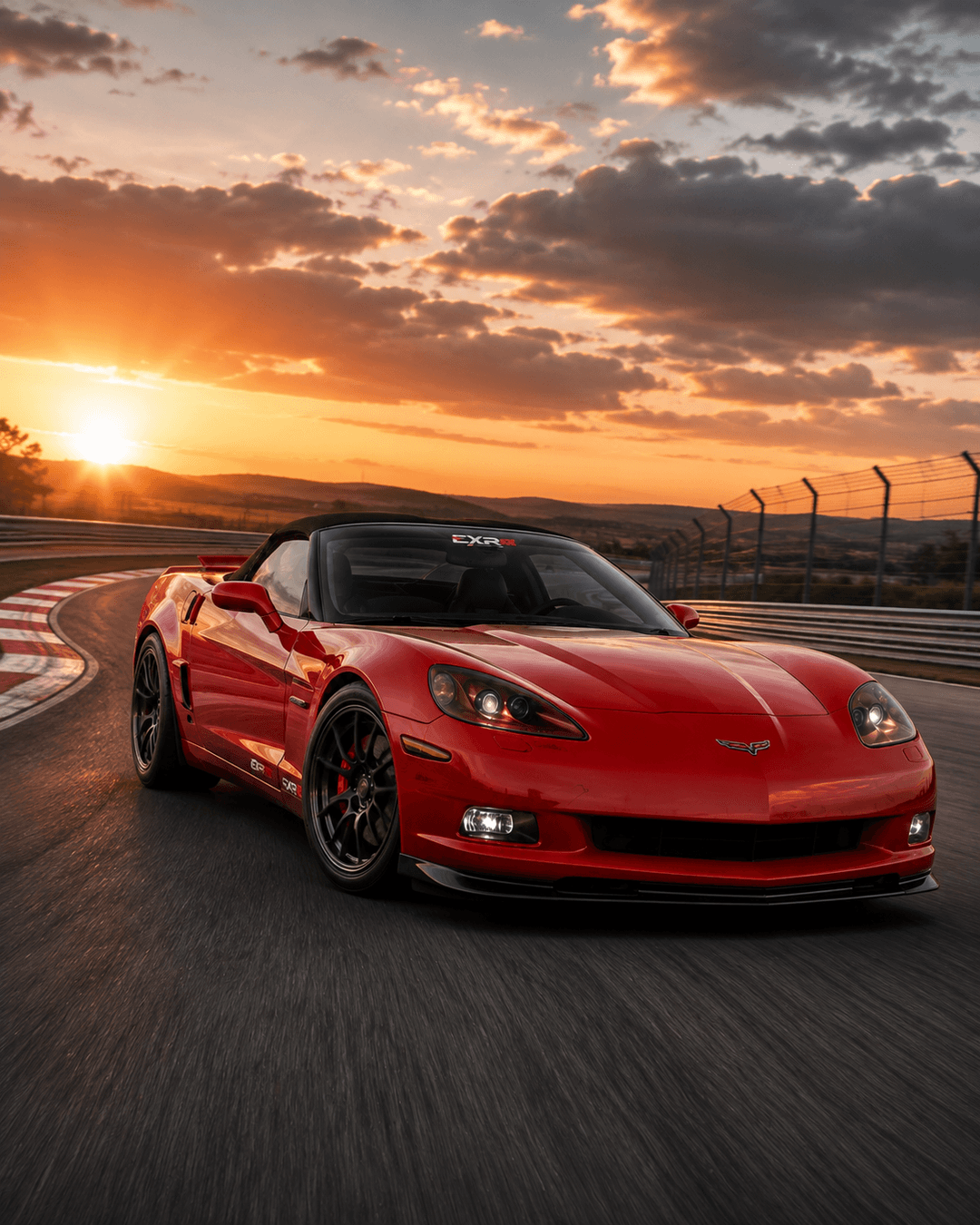
A real fleet means a real choice: loud American character, a rear-wheel-drive Japanese coupe, technical Japanese turbo, or German precision are four completely different experiences. At EXR: four cars, fully documented and transparent - the Chevrolet Corvette C6 (450 hp, V8), the Nissan 370Z (350 hp, V6 3.7L, rear-wheel drive), the Mitsubishi EVO X (300 hp, turbo, 4x4), and the BMW M240 (turbo 6-cylinder) - all on our fleet page.
What to check: Ask to see the fleet on the website, with real models and specs. Generic stock photos of a 'red sports car' are a red flag of a different kind.
QUESTIONS 6–10 · VALUE & FIT
The Next Five: Value, Transparency, and Fit
Is photography included, or an add-on that shows up on the day?
The experience is over in an hour; the footage lasts forever - and it's also the only proof your friends will actually believe. With some operators, photography is an upsell that surfaces at checkout. At EXR: professional video and photo coverage is included with every experience, period.
What to check: Ask up front: video? Stills? Who's filming? When do you get the files, and in what quality? 'You can just film it yourself on your phone' is not an answer.
What happens if the weather turns bad?
A well-run company defines up front what happens in heavy rain, extreme wind, or a severe heat wave, rather than inventing a policy in the moment. A structural advantage worth knowing: the track in desert Arad sees very few rainy days, so postponements are rare to begin with - and when one is needed, a new date gets set over WhatsApp with no penalties and no drama.
What to check: Find out the postponement policy up front: does rescheduling cost extra? Who decides the conditions aren't safe? How much notice do you get?
Is the price transparent - or is it 'leave your details and we'll call you back'?
Price transparency signals confidence in the product. At EXR: the range is public - experiences from ₪990 (~$270) for a roughly hour-long session up to about ₪8,000 (~$2,160) for a full day, depending on the car and format - and an exact quote gets finalized in a single conversation. An operator who hides every number until they've got you on the phone is keeping the room to maneuver for themselves, not for you.
What to check: Look for a public price range on the website, and check exactly what's included: driving time, instructor, photography. A suspiciously cheap price means something got cut - find out what.
Who are the instructors, and what's their background?
The instructor is as much the experience as the car: they determine how much you'll learn, how much you'll dare, and how safe you'll feel. An instructor with a genuine competitive background knows exactly where you're at and how far to stretch that limit. At EXR: the instructors are certified race drivers with competitive experience - not students in a hi-vis vest.
What to check: Ask: how many years has the instructor been in the field? Do they have a competitive background? Don't settle for 'an experienced team' - ask for names and backgrounds.
Does this genuinely work for beginners too?
Most people who receive a driving experience have never driven a performance car before, so the real question isn't "are beginners allowed" but how the program is built for them: a proper briefing, a pace that builds gradually, and an instructor who adapts the session to the driver, not the other way around. If it's your first day on a track, our guide to a first track day answers every worry in advance.
What to check: Describe the actual driver (age, experience, concerns) and see whether the answer is tailored to them - or the same generic line for everyone.
THE SHORT VERSION
The Short Version - Worth Saving and Sending
The ten questions in one line each: is there a safety briefing · a certified instructor inside the car · a real track, not a lot · how many minutes of actual driving · which cars, and what condition · is photography included · what happens with the weather · transparent pricing · who the instructors are · does it really work for beginners. An operator who answers all of them in writing, without hedging, is one you can book with peace of mind.
And finally, our own full transparency: we've laid out EXR's answers to all ten questions publicly - the briefing, the instructors, the fleet, and the tracks on our facts and figures page, and the prices in an open range on the site. We're happy to answer anything else on WhatsApp - that's exactly the test we're inviting you to put us through.
FAQ
Frequently Asked Questions
What's the most important question to ask before booking a driving experience?+
Who sits in the car: whether a certified instructor sits beside you for the entire drive, and what happens in the briefing before you start the engine. This is the question that separates a professional operator from an improvised adventure, and a serious operator answers it in writing, before you pay.
Why does it matter that the instructor sits inside the car instead of just briefing you outside?+
Because the difference plays out in real time: an instructor sitting beside you catches a mistake a second before it happens, calls every corner, and lets you push harder safely. A briefing outside the car alone leaves you on your own at the moment that matters. At EXR, a certified instructor sits in the car for the entire drive, every time.
What is 'actual driving time,' and why ask about it?+
A 'three-hour experience' can contain just 15 minutes of actual driving, with the rest spent waiting, on briefings, and on driver changeovers. Ask directly: how many minutes am I behind the wheel? How many sessions? A fair operator gives you real numbers; an evasive one hides behind 'it depends on how busy we are.'
How do you tell whether the experience runs on a real track or in a lot?+
Ask exactly where you'll be driving and look the name up on a map. A real race track, like the Arad race track with its 14 corners and pit lane, is a built course with designed corners and safety standards. A parking lot with cones can be fun, but it's a completely different experience, and the price should reflect that.
Should photography be included in the price of a driving experience?+
With some operators, photography is a paid add-on that only shows up on the day of the event. Ask in advance: are video and photos included, who's filming, and when do you get the files? At EXR, video and photo coverage is included with every experience, because without documentation, all you're left with is a story with no proof.
How much should a driving experience in Israel cost?+
A transparent range is a good sign: at EXR, experiences run from ₪990 (~$270) for a roughly hour-long session up to about ₪8,000 (~$2,160) for a full day, depending on the car and format. Be wary of a price significantly below the market rate - check what got cut: driving time, the instructor, or the car's condition.
THE EXPERIENCE
Straight to the experience
Race driver for a dayThe main experience - you behind the wheel, a certified instructor beside you.KEEP READING
More Guides You'll Like
 BUYER'S GUIDE
How to Choose a Driving Experience - Five Questions, One Right Decision
Read More →FIRST TRACK DAYFirst Track Day - Everything You Need to Know Before You Get on the Track
Read More → FACT SHEET
EXR Racing in Facts and Numbers - the Fleet, the Tracks, and What's Included
Read More →SAFETY & LICENSETrack Safety and Driving License: What You Need to Know
Read More →Want to ask us all ten?
Happy to answer - we respond to all of them in writing, before you pay a single shekel. Send us a WhatsApp message and start asking.
* Prices shown on the site are for reference only and do not constitute a binding quote. They may change without prior notice. The final price is confirmed with a representative at the time of booking. Full Terms of Use.